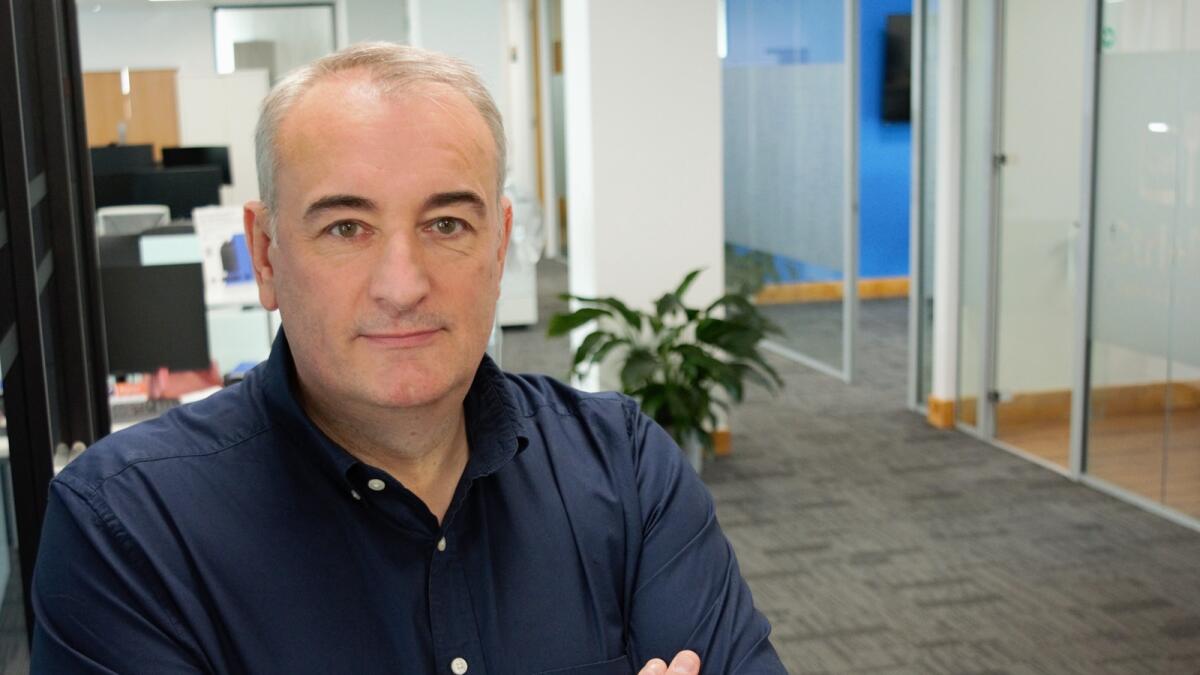
Ken Kelleher, managing director at Landmark Technologies, a technology managed services provider (MSP), says that access to specialist expertise and
reducing risk are usually bigger factors.
“People usually assume it’s about cost. It’s usually about reducing risk and access to a certain depth of skills. A firm of 40 people can justify one IT person
but they can’t be a security specialist, a cloud specialist, a cyber compliance specialist or an AI specialist,” Kelleher said.
“While it might seem attractive to have your own person in-house, outsourcing to a company like us gives you access to a bench of experts that you can draw on at any time. People get sick, people go on holidays but outsourcers can have the team and breadth of experience to remove that single point of failure.”
MSPs have been relied on for a long time to ensure the lights stay on for businesses so they can focus on their core operations. Yet the conversations are evolving now with artificial intelligence (AI) becoming a more common topic of discussion.
“It’s all AI now. We’re talking with our clients a lot about how they can implement AI securely in their businesses. There has been a rush to install AI tools. We’re trying to put that security wrap around it,” Kelleher said.
“Security is often an afterthought and we’re helping to put that front of mind.”
This reflects the bigger change in what is expected of a MSP by its customers. While the essentials will never go away, they’ve become so good at them that
clients want to find out what more they can do with them.
“With other stuff, it’s all business as usual. Hardware and software are very reliable these days, so it’s all about proactive support now. Any IT company worth its salt will be able to keep your IT running. Really, it’s about whether that IT company or MSP can deliver secure AI,” Kelleher said.
With the discussion moving to AI, naturally automation also comes up in conversation and this is changing work for both clients and the MSPs themselves.
“A lot of the manual tasks have become automated. That is freeing up teams, both ours and our clients. That’s what is driving the change in data and how it is changing what organisations are doing,” Kelleher said.
“We’re also moving from being a MSP to being a managed intelligence provider, an MIP. That involves providing AI agents to our clients that can do different tasks for them.”
With their role widening, MSPs are increasingly becoming involved in more important aspects of a client’s business. That, according to Kelleher, means customers should be ready to ask a lot of questions of their provider.
“Ask the MSP about their own security. They should be able to describe their own controls and security. If they aren’t able to then they shouldn’t be dealing with yours,” he said.
While the technology changes, the core challenge doesn’t. Providers are there to make sure that clients can safely balance new capabilities with risk. As AI
increases its presence, security will also grow in importance. “AI is here to stay. Make sure you put a cybersecurity wrap around it.”